Drive down Wydown Boulevard this month and the median still doesn't look finished. There's exposed soil where turf used to be, temporary fencing around light pole footings, and stretches where the old tree canopy simply isn't there anymore. If you've been wondering when this corridor goes back to normal, the honest answer is: not for a while, and not in quite the way you'd expect.
Sixteen months after the May 16, 2025 tornado tore through the city, most of what Clayton needed to do fast is done. What's left is slower, more deliberate, and in a few cases genuinely different from what was there before.
The Fast Work Is Finished
Certified arborists identified 186 trees across the city that had to come down after the storm. All 186 are gone. Another 468 trees needed pruning to save what could be saved, split between city forestry crews handling 134 of them right away and contractors finishing the remaining 334. That work is complete too.
Stumps are the part still catching up. City crews have pulled 207 so far, and a contractor is working through 370 more, with the city targeting completion by September 30, 2026, according to the city's own recovery update. That date matters more than it sounds like it should, because a stump in the ground is a placeholder that can't hold a new tree. Until the last one comes out, the replanting math doesn't start.
What Actually Grows Back, And When
Here's the part that surprises people: Clayton isn't simply putting the old trees back. The city worked with certified arborists and the Missouri Department of Conservation to build a citywide replanting plan, and the version of it laid out in the city's one-year update calls for 595 trees across Clayton, not counting the Wydown median, which is being handled as its own project. The contract for that work has been awarded, with planting beginning in late 2026 and the first phase specifically slated for winter and spring of 2026 into 2027.
The trees going into the ground will typically be 2 to 3 inches in diameter. That's intentional. Smaller trees adapt better to tight tree-lawn spaces and have a better long-term shot at healthy growth than large transplants forced into the same footprint. It also means the canopy you remember from before May 2025, built over decades, isn't returning on the same timeline it was lost on. A two-inch sapling planted this winter is a story that plays out over years, not months.
Species selection isn't random either. The city's forester chose what goes where, as the recovery update puts it, "with careful attention to diversity and long-term canopy health." That phrase is doing more work than it looks like. Clayton has an Emerald Ash Borer Preparedness Plan on the books, built around the reality that a canopy leaning too heavily on one species is a canopy one pest or one storm away from a repeat of exactly what just happened. The replanting plan is a chance to correct for that, not just refill it.
The Median Everyone Actually Notices
The Wydown Median Restoration is the most visible piece of this whole recovery, and it's also the one still mid-construction right now. The city is running it in two phases:
| Phase | Work | Timeline |
|---|---|---|
| Phase 1 | Street lighting | August–October 2026 |
| Phase 2 | Trees, plants, irrigation | September 2026–June 2027 |
Phase 2 carries an estimated cost of $1.7 million, and it includes a full replacement of the public irrigation system along Wydown from University Drive to the city limits. Put plainly, the median won't have its planting largely resolved before next summer. If you're driving that stretch expecting the torn-up look to clear by winter, it won't. That's the design.
The same is true a few blocks in every direction. Roughly 150 to 170 light poles and fixtures across nine electrical circuits were damaged in the storm, and replacement work runs from August 2026 through March 2027, coordinated with the Wydown project so the two efforts don't duplicate trenching. Lights are being replaced in kind, meaning the look of the streetscape stays consistent even as the hardware underneath is new.
The Buildings Recovery Forgot To Finish
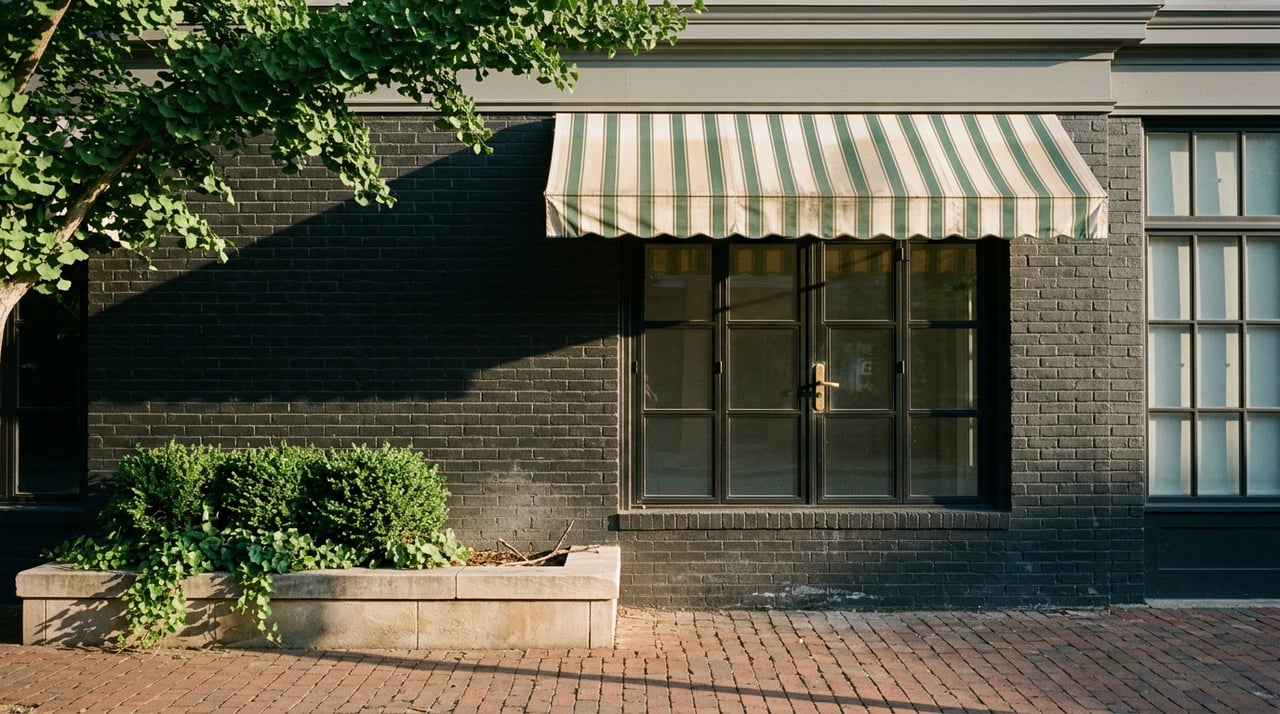
Two city-owned buildings are still waiting on repairs that haven't made it through insurance and FEMA review yet. 10 S Brentwood needs specialty slate tile, copper panels, and copper flashing replaced, an estimated $4.3 million job still under insurance review. 10 N Bemiston needs roof tile work, underlayment, a chimney cap, and a canvas awning replacement. Neither is a crisis. Both are a reminder that "recovery" isn't a single finish line the whole city crosses on the same day. Some pieces move fast because they're urgent. Some move slow because they're expensive, or because the paperwork behind federal reimbursement takes its own time. The city's total estimated recovery cost across every project sits at roughly $12.6 million, and a meaningful share of that is still working its way through FEMA's review process.
A Distinction That Predates The Storm
There's a piece of good news in the middle of all this that has nothing to do with tornado repair. Clayton was recently named a Bird City Missouri community, only the second city in the state to earn the designation. It reflects years of work by the city's Sustainability Advisory Committee on habitat protection, reduced threats to birds, and resident education, work that was underway long before the storm. Clayton has also been a Tree City USA under the Arbor Day Foundation since 1992, and it maintains a Lights Out Heartland resolution encouraging residents and businesses to dim exterior lighting during the heaviest migration months of May and September, which is happening again right now.
None of that is tornado response. But it's the same civic instinct showing up twice. A city that had already been thinking hard about canopy health and habitat diversity before the storm is the same city now designing a more resilient tree mix instead of just replacing what fell tree for tree. The storm didn't create that mindset. It gave it a much bigger project to prove itself on.
What This Means If You Live Here
A few things worth knowing as you go about your week in Clayton this fall:
- The stump backlog should clear by September 30, 2026, which is the real trigger for replanting to begin on your street, not the storm anniversary.
- New street trees will look noticeably smaller than what they're replacing for the first several years. That's by design, not a shortfall.
- The Wydown median stays under active construction through at least June 2027. Expect the torn-up look to persist through the winter before Phase 2 planting starts filling it back in.
- Light pole replacement continues through March 2027 across nine circuits citywide, so a dark or temporary pole near you isn't necessarily storm-related at this point, it may just be mid-swap.
- If you notice more species diversity on your block once planting starts, that's intentional. The city is actively avoiding the kind of single-species density that made the pre-storm canopy more vulnerable in the first place.
Recovery, in other words, isn't a single date. It's a series of overlapping timelines, some finishing this month, some running another two years, and a few quietly redesigning what "normal" even looks like once they're done.
We spend a lot of our time at Thompson & Richardson paying attention to details like these, because the health of a street's canopy, the timing of a city project, and the small civic decisions behind them are part of what makes a neighborhood worth knowing well. If you're weighing a move in the Clayton, Ladue, or Frontenac corridor and want a conversation grounded in that kind of detail rather than a generic pitch, we'd welcome the chance to talk. Request a Private Home Consultation whenever you're ready.