If you want a place that feels polished, active, and easy to navigate without giving up the comfort of a residential setting, Clayton stands out fast. It offers a true urban rhythm in a compact footprint, with offices, restaurants, parks, transit, and everyday errands woven close together. For buyers, sellers, and anyone comparing St. Louis area lifestyles, understanding how Clayton actually lives day to day can help you picture whether it fits your routine. Let’s dive in.
Why Clayton Feels Urban
Clayton feels urban because it has a concentrated center, not just a few busy roads. The city has an estimated 17,807 residents in 2025 across just 2.51 square miles, while its central business district includes about 7 million square feet of office space and 1 million square feet of retail. That level of activity creates real daily energy in a relatively small area.
At the same time, Clayton balances that commercial core with residential and park space. The city says 81% of its land is used for residential or park purposes, which helps explain why the experience can shift quickly from lively streets to quieter blocks. That mix is a big part of Clayton’s appeal.
Clayton’s role as the St. Louis County seat also adds to its identity. The downtown core has deep roots dating back to the 1870s, and later zoning and height-rule changes helped shape the skyline people recognize today. In practical terms, Clayton grew into an actual center of activity rather than a spread-out suburb.
Walkability in Daily Life
One of Clayton’s biggest lifestyle advantages is how many daily destinations sit close together. The city describes most neighborhoods as being within walking distance of offices, restaurants, galleries, and specialty boutiques. If you value convenience, that can make everyday routines feel simpler and more connected.
This does not mean every trip happens on foot. Clayton supports a car-light lifestyle for some people and some errands, but it is not fully car-free. The setup works best if you like having options, including walking, transit, and driving when needed.
The local demographics also support this convenience-first pattern. Census data show a median household income of $123,000, a mean commute of 16.6 minutes, and 84.9% of adults age 25 and older holding a bachelor’s degree or higher. Together, those numbers reflect a close-in community where access and efficiency matter.
Transit Adds Flexibility
Clayton benefits from two MetroLink Blue Line stations: Clayton Station and Forsyth Station. The city says these stations help support a daily workforce of about 45,000 people. That transit access strengthens the area’s urban feel and gives residents another way to move around the region.
For some households, that can make commuting or meeting friends easier without always relying on a car. It also adds another layer of convenience for people who want a location with multiple transportation options. In a suburban market, that kind of flexibility can be hard to find.
Parking Is Part of the Routine
Parking in Clayton is structured and predictable. The city enforces meters Monday through Friday from 8 a.m. to 5 p.m., while weekend enforcement is off. Free parking is available at Shaw Park and the Center of Clayton.
That setup says a lot about how Clayton functions. It is active enough to need an organized parking system, but still accessible enough that everyday visits do not have to feel complicated. For many residents, that balance is part of the city’s appeal.
Parks Keep Clayton Grounded
A walkable lifestyle is not only about shops, cafés, and office buildings. In Clayton, parks and recreation are built into the experience, which helps the city feel livable rather than crowded. Green space is one reason the area’s energy feels comfortable day to day.
Shaw Park is the city’s oldest and largest park at 47.47 acres. Located near the business district, it includes walking paths, gardens, an aquatic center, tennis courts, and fields. That puts meaningful recreation close to the core instead of pushing it to the edges.
Oak Knoll Park adds another 14.5 acres with a half-mile walking path, pond, gardens, and summer concerts. It gives residents another place to slow down, exercise, or gather for seasonal events. In a compact city, having that kind of breathing room matters.
DeMun Park is much smaller at one-half acre, but it adds useful neighborhood-scale space in the DeMun business district. With two playgrounds, benches, and a fenced layout, it shows how even smaller pockets of open space contribute to Clayton’s daily rhythm. These parks help turn walkability into a more enjoyable lifestyle.
Recreation Is Part of the Core
The Center of Clayton reinforces that point. The city describes it as a 136,000-square-foot wellness hub with gymnasiums, a climbing wall, a suspended jogging track, pools, fitness classes, and resident and worker discounts. That is a substantial amenity, not just a small local gym.
For residents, it means recreation can be part of a regular routine without a long drive. For buyers comparing communities, it highlights how Clayton supports an active lifestyle beyond dining and shopping. The walkable core works because it is backed by real infrastructure.
Street Life, Cafés, and Culture
Clayton’s urban energy is also social and cultural. The city’s public-art program includes works by artists such as Botero, Milles, Ben Tre, and Trova, and it offers both a public-art map and an audio walking tour through the city’s art, history, and parks. That gives downtown another layer of interest beyond business activity.
At street level, the experience feels tangible. Coffee spots like Cafe Breve and Kaldi’s Coffee help define the everyday flow of the area, while Bruno David Gallery adds to downtown’s arts presence. These are the kinds of places that make a neighborhood feel lived in, not just developed.
Clayton also hosts recurring events that support a sense of momentum and connection. The city calendar includes gatherings such as the Clayton Music & Wine Festival, Shaw Park Social, Musical Nights at Oak Knoll Park, and neighborhood block parties. When people talk about Clayton’s energy, these regular experiences are part of what they mean.
A Mix of Downtown and Residential Calm
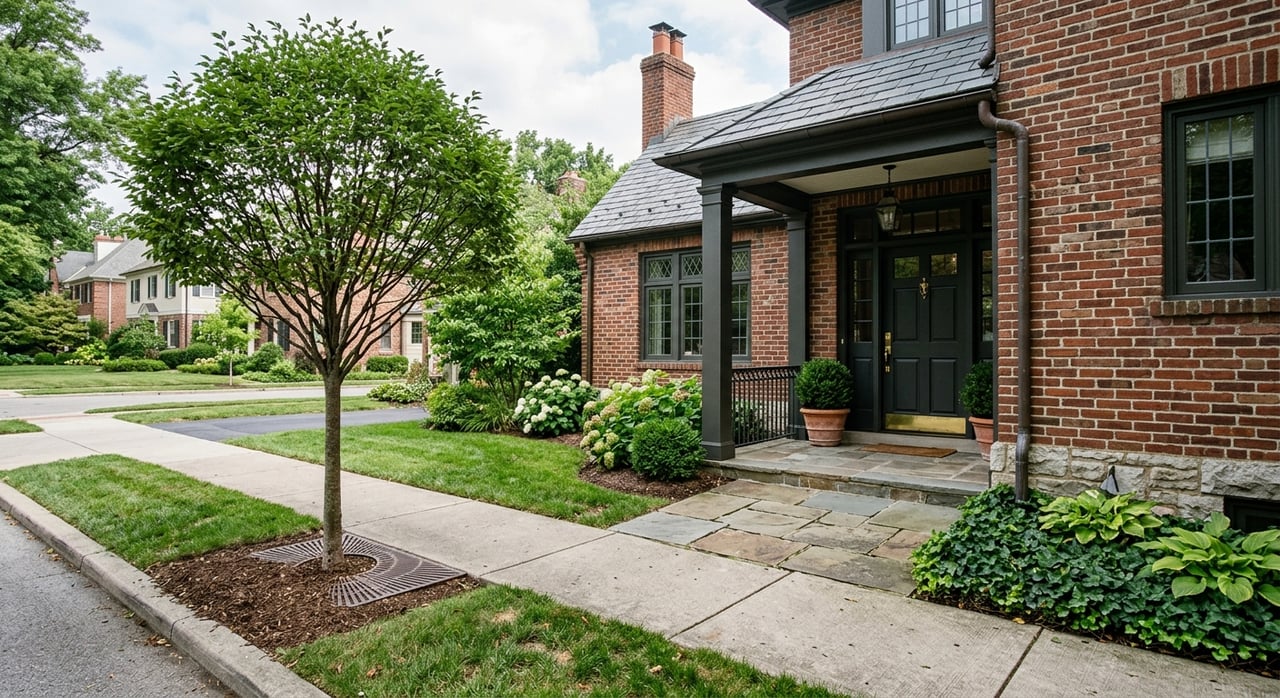
One reason Clayton appeals to so many buyers is that it does not force an all-or-nothing choice. The city itself describes Clayton as a mix of bustling downtown and quiet residential neighborhoods. You can have access to activity without living in the middle of constant intensity.
That balance matters if you want convenience but still value a more residential home setting. It is especially relevant in a market where many buyers want proximity to dining, parks, and transit, but also want a traditional neighborhood feel. Clayton offers a version of both.
The city also includes a range of housing types, including single-family homes, condominiums, and multi-family apartments. That variety supports different lifestyles and life stages. For sellers, it also helps explain why Clayton attracts a broad pool of interested buyers looking for access, location, and ease.
Clayton Compared With Ladue
Clayton and Ladue are close neighbors, but they offer different daily rhythms. Clayton is structured around a denser, more pedestrian, more transit-linked experience. Ladue, by contrast, is shaped more by spacious residential planning.
Ladue’s Residential District B requires a 1.8-acre minimum lot area and 50-foot front, side, and rear setbacks, which reflects a very different land-use pattern. Census data also show Ladue’s estimated 2025 population at 8,934, a 95.7% owner-occupied housing rate, and a median owner-occupied home value of $1,056,300. The overall feel is quieter and more estate-oriented.
Clayton offers a different type of convenience. The city combines residential streets with a true mixed-use center, and Census data show a 54.9% owner-occupied housing rate with a median owner-occupied home value of $830,000. If you want a lifestyle with more walkability and a stronger urban pulse, Clayton stands apart.
What This Means for Buyers and Sellers
For buyers, Clayton offers a compelling blend of accessibility, recreation, culture, and neighborhood comfort. If your ideal routine includes grabbing coffee, using transit, walking to parts of downtown, or spending time in well-used parks, Clayton gives you a clear picture of what that can look like. It feels active without feeling overwhelming.
For sellers, that lifestyle story matters. Buyers are often responding to more than square footage alone. In Clayton, they are also buying into a way of living that feels connected, polished, and practical.
That is especially important for homeowners preparing to sell a high-end property in the Clayton corridor. Clear positioning around location, convenience, and everyday experience can strengthen how a home is presented in the market. The right strategy helps buyers see not just the house, but the full lifestyle around it.
If you are thinking about selling in Clayton or nearby and want a polished, well-managed plan, Thompson & Richardson Real Estate offers a private, high-touch approach designed to help you prepare, present, and position your home with care.
FAQs
What makes Clayton, Missouri feel more urban than suburban?
- Clayton has a concentrated downtown core with about 7 million square feet of office space, 1 million square feet of retail, MetroLink access, parks near the business district, and many neighborhoods within walking distance of daily destinations.
Can you live a walkable lifestyle in Clayton, Missouri?
- Clayton can support a car-light lifestyle for some trips because many neighborhoods are close to offices, restaurants, galleries, boutiques, parks, and two MetroLink Blue Line stations, though most residents still use a mix of walking, transit, and driving.
What parks and recreation options are in Clayton, Missouri?
- Clayton includes Shaw Park, Oak Knoll Park, DeMun Park, and the Center of Clayton, which together provide walking paths, gardens, sports facilities, pools, fitness spaces, concerts, and other everyday recreation options.
How does Clayton compare with Ladue for daily lifestyle?
- Clayton offers a denser, more pedestrian, more transit-linked routine, while Ladue is defined more by spacious residential planning and larger-lot living.
Why do buyers look closely at lifestyle in Clayton, Missouri?
- Buyers often value Clayton for its mix of walkability, transit access, parks, public art, cafés, events, and quieter residential streets, which together create a connected and convenient daily experience.